Understanding Your Energy Label: How to Improve Ratings

Decoding the colours: Understanding your Energy Label in Spain
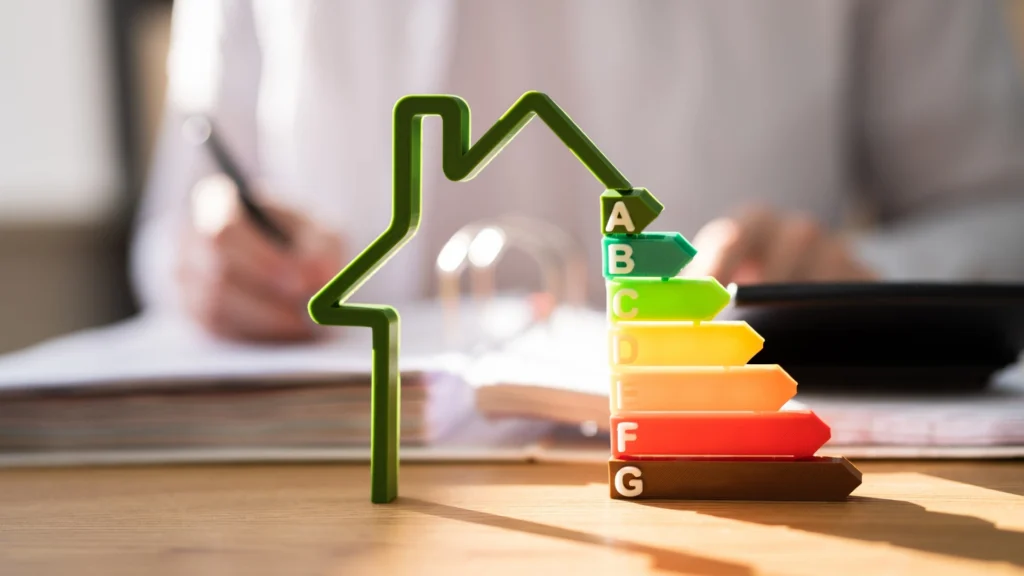
If you’ve checked out a property listing in Spain lately, you probably spotted that rainbow-colored scale from dark green “A” to bright red “G.” That’s the energy label. And by 2026, those letters really matter. They aren’t just a tiny detail tucked away in a brochure anymore, they play a huge role in how much your property is worth, whether you can get a mortgage, and even if it’ll stand up legally down the line.
Spain is strengthening its environmental regulations to line up with the rest of Europe, so determining your property’s position on that scale, and knowing how to boost it, is honestly one of the smartest ways to keep your investment safe.
The anatomy of a high-performance rating of your Energy Label
Every energy certificate in Spain breaks down two key things: your home’s energy use and how much CO2 it pumps out.
If your place scores an “A” or “B,” you’re at the top of the class. These are pretty much reserved for new homes or those that use a lot of renewables, think of it as “Zero-Emission” or “Near-Zero” status.
Most well-kept Spanish homes land in the “D” or “E” range. That’s where the bulk of properties sit right now. They’re acceptable for the moment, but lots of people are eyeing renovations before 2026 rolls around, just to steer clear of penalties for falling into “G-rating” territory.
Down at the bottom, you’ve got “F” and “G.” These are the worst performers. If a house has a “G,” buyers see it as a red flag, expect steep utility costs, and there’s no getting around the fact that upgrades are coming sooner or later.
Practical steps to improve your Energy Certificate in Spain
Fixing up your place isn’t just some “eco-friendly” move, it’s really about smart upgrades. And honestly, according to the 2026 rules, you don’t have to start from scratch to see serious improvements.
Want to bump up your energy certificate? Focus on the “thermal envelope.” In a lot of coastal Spanish homes, it’s not the walls that waste heat, it’s those old, single-glazed windows. Swapping them for double or triple glazing with a thermal break can boost your rating by a whole letter, just like that.
Next up, check your heating and cooling. If you’ve still got an old gas boiler or clunky electric radiators, ditch them for a modern air-source heat pump. These pumps pull renewable energy right out of the air, slashing the “non-renewable consumption” number that’s key to your energy label. It’s a real game changer.
The ROI of a better letter for your Energy Label
So, why upgrade from an E to a C rating? It’s actually pretty straightforward. The EPC Spain rating decides if you qualify for a “Green Mortgage,” and starting in 2026, most big banks will offer better deals, lower interest rates if your home has an A or B rating. A house that’s easier and cheaper to finance? That’s instantly more appealing to buyers.
Plus, the Spanish government plans to crack down on homes with bad ratings. By 2030, properties with the lowest energy scores might not even be allowed to be rented out. So, if you improve your certificate now, you’re protecting yourself from losing value, and getting ahead of the game.
Real-world comfort with a high Energy Label
Sure, the main reason for getting an energy performance certificate in Spain is to follow the law, but the actual perks are way more personal. When your home’s efficient, you notice it every day. Winters aren’t icy mornings, and summer nights don’t leave you sweating and uncomfortable.
Here’s a smart move: if you’re thinking about renovating, take a look at the “Recommendations” section on your certificate first. The expert who checked your place has already figured out which upgrades will bump up your rating the most without draining your wallet.
How you feel the difference with a higher Energy Certificate in Spain
Most people worry about the legal side of getting an energy performance certificate, but honestly, the real perk hits you right when you step inside your home. In Spain, summer can roast you with temps over 40°C, and winter nights get pretty chilly. So, if your house keeps a steady climate inside, you’ve got something close to luxury. Upgrading your property’s rating from a G to an A or B doesn’t just tick a box, it changes how your home actually breathes. Good thermal insulation feels like armor. Come August, you won’t have to blast the air conditioning nonstop. The walls keep the heat out, and your rooms stay cool naturally.
Then, when winter rolls in, whether it’s damp along the coast or bone-dry inland, a solid energy label rating makes all the difference. With proper insulation, the warmth from your heating stays inside where it belongs, instead of leaking out through flimsy windows or gaps. You quit adjusting the thermostat every hour or shivering next to icy walls. It’s not just about lowering those utility bills (though that’s a bonus). The place feels quieter, drafts disappear, humidity drops, and everything’s just more peaceful. A better energy certificate means the house does the work, keeping you comfortable day in and day out, no matter what’s happening outside.